





Skip to content
Chevron Chevron
English Chevron
Home / Products / Urine control test 11

Questions & Tips

Here you will find all the information and answers to your questions about our products.
How do urine test strips work? Plus
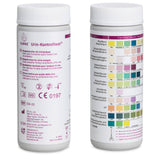
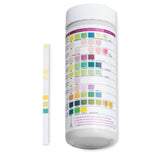
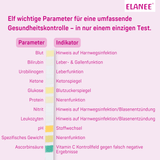
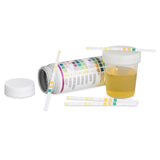
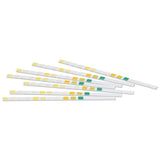
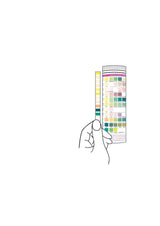
The test strips have 11 square color fields, one for each parameter. After the test strips are immersed in urine, the color fields change depending on the concentration of the respective substance present in the urine.
How reliable are urine test strips? Plus
The analytical sensitivity of the urine control test is > 90%, meaning that the test strips reliably measure substances in urine. Since this product is a self-test, the correct interpretation of the test results depends on the individual case. If you are unsure, you should consult a doctor.
How long should the test strip be immersed in the urine? Plus
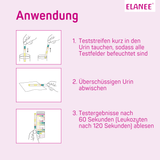
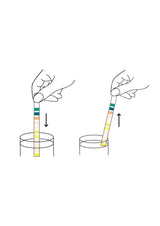
The test strip should only be immersed in the urine briefly, for about 1 second, so that all test fields are moistened with urine.
How long does it take to read the test result? Plus
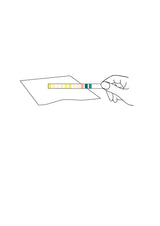
The result can be read after 60 seconds (leukocytes after 120 seconds).
What does the glucose (sugar) parameter on a urine test strip indicate? Plus
Glucose in urine is an indication that the blood sugar level is very high (e.g., in diabetes mellitus).
When should I see a doctor if my test result is abnormal? Plus
If a test result for one parameter is positive, you are unsure about the interpretation of the result, or you have other symptoms, you should always seek medical advice.
What does the presence of blood on a urine test strip indicate? Plus
Blood in the urine (hematuria) can indicate infections, kidney or bladder diseases, kidney stones, or injuries. Even the smallest amounts, invisible to the naked eye, can be detected using a urine test.
What does the protein parameter on a urine test strip indicate? Plus
Protein in the urine (proteinuria) suggests possible kidney disease, high blood pressure, or infections.
What does the nitrite parameter on a urine test strip indicate? Plus
Normally, no nitrite is detectable in urine. The most common pathogens of urinary tract infections, such as Escherichia coli and most other urinary pathogens, convert nitrate ingested with food into nitrite. Detection in urine is suitable for the early detection and prevention of recurrent urinary tract infections. Nitrite is produced when bacteria in the urinary tract convert nitrate. A positive test result is a typical indication of a urinary tract infection.
What does the parameter leukocytes (white blood cells) on a urine test strip indicate? Plus
Leukocytes (white blood cells) in urine suggest inflammation or infection of the urinary tract or kidneys.
What does the bilirubin parameter on a urine test strip indicate? Plus
Bilirubin is a breakdown product of the red blood pigment (hemoglobin). In urine, it often indicates a disorder of the liver or biliary tract, e.g., in cases of hepatitis or cholestasis.
What does the urobilinogen parameter on a urine test strip indicate? Plus
Urobilinogen is produced during the breakdown of bilirubin. An elevated level can indicate liver damage or an increased rate of red blood cell destruction.
What does the ketone parameter on a urine test strip indicate? Plus
Ketones are produced when the body uses fat instead of glucose as an energy source. Elevated levels occur in cases of diabetes, fasting, very low-carbohydrate diets, or strenuous physical activity.
What does the pH test result of a urine test indicate? Plus
The pH value shows whether the urine is acidic or alkaline. It is influenced by diet, fluid intake, and possible illnesses. Consistently acidic or alkaline urine can be a sign of metabolic disorders or kidney stones.
What does the specific gravity test result of a urine test indicate? Plus
Specific gravity indicates the concentration of the urine. It provides information about fluid intake, kidney function, and possible fluid losses (e.g., through sweating, diarrhea).
What does the parameter ascorbic acid (vitamin C) indicate in a urine test? Plus
Further information Plus
A urinalysis provides valuable information, but does not replace a medical diagnosis. Abnormal results should always be medically investigated.

Current blog posts from the EinfachFrauSein blog

Bakterielle Vaginose & pH-Dysbalance: Unser 3-Ebenen-Konzept - ELANEE Shop
Beschwerden
Intimpflege
Symptome
Mar 25, 20260 comments

Bacterial Vaginosis & pH Imbalance: Our 3-Level Concept

A healthy vaginal flora ensures a slightly acidic environment that protects against undesirable germs. If this balance is disturbed, the pH value can change. A possible consequence is bacterial vaginosis...
Read more Arrow
Trockenheit im Intimbereich: Unser 3-Ebenen-Konzept - ELANEE Shop
Beschwerden
Intimpflege
Symptome
Mar 25, 20260 comments

Vaginal Dryness: Our 3-Level Approach

A healthy vaginal flora ensures a slightly acidic environment that protects against undesirable germs. If this balance is disturbed, the pH value can change. A possible consequence is bacterial vaginosis...
Read more Arrow
Die Scheidenflora richtig aufbauen - ELANEE Shop
Intimpflege
Nov 18, 20251 comment

How to properly establish the vaginal flora

The vaginal flora protects your intimate area and prevents infections. If this balance is disrupted, it can lead to health problems such as bacterial vaginosis or yeast infections. But don't...
Read more Arrow