

The pelvic floor is a layer of muscles and connective tissue that acts like a trampoline, forming the lower boundary of the pelvis. It supports important pelvic organs – including the bladder, bowel, and (in women) the uterus – and helps to keep them in their correct position.
At the same time, the pelvic floor plays a central role in continence: Well-functioning pelvic floor muscles support controlled opening and closing, for example, during urination or defecation. If these muscles weaken – for example, due to pregnancy and vaginal birth, aging, or persistent pressure in the abdominal cavity – this can impair the stability of the pelvic organs and promote discomfort.
Everything you need to know about the pelvic floor
What is the pelvic floor?
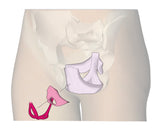
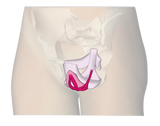
The pelvic floor is a kind of plate made up of three layers of muscle and connective tissue. Roughly the size of a hand, elastic and flat, it is located between the pubic bone, tailbone, and ischial tuberosities. The urethra, vagina, and anus pass through the pelvic floor muscles.
The outer layer (erectile tissue and sphincter muscle layer ) surrounds the urethra and anus like a figure eight. It extends from the pubic bone to the coccyx.
The middle layer (urogenital diaphragm) plays a crucial role in closing the urethra and contracting the vagina. It lies in a fan shape between the ischial tuberosities in the anterior part of the pelvis and below the bladder.
The inner layer (pelvic diaphragm) forms the power center of the body's core – as it bears the main weight of the organs. This particularly broad and strong muscle runs from the pubic bone to the coccyx.
Everything you need to know about the pelvic floor
What functions does the pelvic floor have?
The functions of the pelvic floor are already evident in its name: As the base of the pelvis and abdominal cavity, it bears the main weight of the organs located there. It supports the hips and legs – and ensures that we can stand upright in the first place. We also use this muscle group to control the sphincter function of the bowel and bladder. In other words, the pelvic floor muscles:
- It ensures that the bowels and bladder only empty when desired.
- It holds the internal organs of the abdominal and pelvic cavity.
- During pregnancy, it supports the weight of the child.
- is relevant for pain-free sexual intercourse.
- stabilizes body posture.
- It tenses up reflexively when coughing, sneezing, laughing, or carrying heavy objects.
What are the typical symptoms of a weak pelvic floor?
A healthy and strong pelvic floor is very important – but with increasing age, pregnancy, or an unhealthy lifestyle, this muscle group loses strength and elasticity. The consequences of a weak pelvic floor can severely impair quality of life:
- Stress incontinence
- Urge incontinence
- Fecal incontinence or constipation
- Pain in the lower abdomen and/or back
- poor posture
- Malposition of the organs in the abdominal cavity
- Uterine or vaginal prolapse
- bladder or bowel prolapse
- Perceptual disorder and disturbance of the sensation of pleasure
Stress incontinence means that the pelvic floor muscles can no longer compensate for sudden pressure. When you laugh or cough, this can lead to involuntary urination or – in rarer cases – bowel leakage.
Strengthening the pelvic floor: tasks and training levels
With our pelvic floor training products, you can directly target the affected muscle group in four problem-solving steps: from awareness of the pelvic floor muscles to conscious muscle control and muscle building to stabilization. To gradually train and strengthen the three layers of the pelvic floor, combine our ELANEE training aids with the exercises.
Feel the pelvic floor muscles
In the first problem-solving stage, you'll identify your pelvic floor muscles and learn to consciously perceive them. This will help you perform the exercises with precision—experience has shown this to be an important factor for the success of pelvic floor training. Different muscle groups often work together to trigger a specific movement. However, you rarely actively tense the pelvic floor muscles and therefore have no sense of them. In the first stage, you'll learn to differentiate the pelvic floor muscles from other muscle groups.
Use our Phase I active pelvic floor training aids.
These products are a medical device and an approved medical aid, and can be prescribed by a gynecologist or urologist. They are even free of charge for women with stress incontinence.
Conscious muscle control
Now that you've become aware of and activated the muscle group, it's time to learn to consciously control it. In Stage 2, you practice contracting the pelvic floor muscles in a targeted manner without tensing surrounding muscle groups, such as the gluteal muscles. Regular exercises with the Phase I Active pelvic floor training aids ensure this. The training is based on the biofeedback principle. If you find insertion difficult, use the intimate hydrogel.
Build pelvic floor muscles
The third step is to strengthen your pelvic floor muscles through regular training. Targeted exercises can strengthen the different muscle layers of the pelvic floor, similar to weight training. The reflexive contraction of the pelvic floor muscles and the progressive increase in weight ensure effective muscle building.
Our tip: If you can easily hold the heaviest cone from Phase I, use our intimate hydrogel to increase the difficulty! The cones focus on the outer and middle muscle layers. Also, check out our carefully curated exercise program. It will also help you strengthen your pelvic floor, especially the inner layer.
The pelvic floor training aid Phase II is used for long-term follow-up training of the pelvic floor muscles.
Like the Phase I cones, it focuses on the outer and middle layers of the pelvic floor—but through passive stimulation. Two freely swinging balls inside the cone vibrate gently with each movement, thus activating the pelvic floor.
Feel free to use our intimate hydrogel to make inserting the cone easier.
Stabilization
Like any muscle, the pelvic floor muscles will eventually atrophy without training. To stabilize the pelvic floor and permanently counteract stress incontinence, you should regularly check your pelvic floor with the Phase I Kegels. If your muscles have weakened again, start training again. Stabilization is achieved through further pelvic floor exercises—with or without training aids—and the repeated use of the Phase II Kegels.
When can I train my pelvic floor?
During pregnancy
During an uncomplicated pregnancy, you can exercise your pelvic floor muscles at any time, as long as you feel comfortable doing so. This directly helps prevent potential problems that can arise from weakened pelvic floor muscles. The weight of your growing baby rests primarily on this muscle group – so strengthening it is beneficial.
After birth
During childbirth, your pelvic floor naturally stretches to allow your baby to pass through. Once your cervix has closed again – around six weeks postpartum – you can begin or resume pelvic floor exercises. This will support your pelvic floor muscles in their regeneration. If you are unsure whether you are allowed to do the exercises, ask your doctor or midwife beforehand.
In the case of stress incontinence
If you suffer from bladder weakness caused by a weakened pelvic floor, our pelvic floor trainers and exercises can help you strengthen the muscles again. However, it's always essential to determine whether it's truly stress incontinence, as bladder weakness can have many different causes.

Always seek medical advice
Important note: This article contains only general information and should not be used for self-diagnosis or treatment. It is not a substitute for a consultation with a doctor.
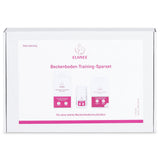
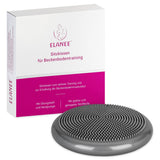
Products from the field of pelvic floor training





More articles
What is the pelvic floor?
The pelvic floor is a kind of plate made up of three layers of muscle and connective tissue. Roughly the size of a hand, elastic and flat, it is located...
Read more

Pelvic floor muscle recovery – what, when, how much?
I've been a midwife for twelve years and have accompanied many women through pregnancy, childbirth, and the postpartum period. Almost all of them take a postnatal exercise class—after all, it's...
Read more

Pelvic floor muscles goodbye – insights into pelvic floor training after pregnancy
My name is Tanja, I'm 31 years old and a recent mother of two. With the onset of my first pregnancy, I first began to think about the topic of...
Read more


