

First signs of menopause
With the onset of menopause begins a new phase of life that is characterized by many hormonal and physical changes.
This transition is noticeable through initial symptoms such as hot flashes or sleep disturbances. However, there are many more signs. To help you understand exactly what is happening in your body, the most important information has been compiled here for you.
What does it mean to go through menopause?
Every woman reaches this phase of life at some point. Some sooner, some later. Menopause usually begins in the mid-40s. When it starts for you depends on your genetics, but medical reasons such as surgeries, chemotherapy, or PCOS also influence the onset.
Once it begins, your body starts to reduce the production of estrogen. This, in turn, causes your period to become more irregular and eventually stop altogether. However, this does not happen overnight but unfolds over four different phases that span several years.
Premenopause
This phase is the start of the menopause transition. It spans several years and manifests through initial minor signs, which are still very subtle. For this reason, many women do not realize at first that something has changed. Sometimes it is only noticeable through a change in the cycle. The length of the period becomes longer or shorter, or occasional sleep disturbances may occur.
Perimenopause
In this phase, particularly strong hormonal fluctuations occur. As a result, the signs usually become clearer. However, the severity of the symptoms varies from woman to woman.
At the end of the cycle, a drop in estrogen can lead to hot flashes and fluctuations between low and high blood pressure. The intimate area also changes. The vagina becomes dry, which can lead to pain or discomfort. But with the right care, you can maintain your intimate health and make everyday life easier for yourself.
Menopause
Menopause is not exactly a phase like the preceding ones. It actually only marks the point in time of the final menstrual period and can only be determined in retrospect. From the moment you have not had a period for twelve months, you are in the postmenopause.
Postmenopause
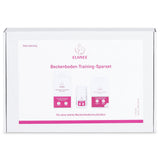
In the following years, your hormone production remains permanently lowered, and your body adapts to the low hormone level. As a result, the symptoms slowly subside. Nevertheless, discomfort can still occur from time to time. For instance, breast tissue loses firmness, and night sweats and hot flashes can still occur during this phase. The pelvic floor can also change with increasing age. Regular pelvic floor training can help to specifically strengthen the muscles and support bladder control. Depending on the training goal, various aids can be used – for example, pelvic floor trainers, a Pilates ring, or a seat cushion, which can support the conscious perception and activation of the pelvic floor. Dryness in the genital area can also lead to problems. However, with moisturizing products such as gels or suppositories, you can ensure that you feel comfortable in your intimate area again. For example, they help to regenerate your vaginal mucosa and relieve itching and pain.
Menopause starting in your mid-thirties?
The start of menopause cannot be pinned down to a specific date. As a rule, perimenopause begins between the ages of 40 and 45. However, some women may experience their first hormonal changes as early as their 30s. In this case, early menopause and its symptoms usually appear first through cycle fluctuations, which are rarely noticed at first because they are only exceptions. It is only when the ovaries stop functioning completely before the age of 40 that it is referred to as premature menopause. However, only about one percent of women are affected by this phenomenon.
The first signs of the onset of menopause
Recognizing the start of menopause is not always easy. Sometimes these are just brief hormonal fluctuations that disappear as quickly as they came. To be really sure, you could keep a kind of diary in which you document your complaints over at least three months. This will give you a good overview of the duration and frequency of the symptoms and, if necessary, you can discuss this directly with your gynecologist. Here you will find a list of things you should pay close attention to.
Menopause and its symptoms
- Changes in your cycle: The length of your cycle changes. It may become longer or shorter.
- Changes in your period: The duration of your bleeding changes due to hormonal fluctuations. It may also become heavier or significantly lighter.
- Mood swings: When your hormones go haywire, your mood often does too. Increased irritability can also be an issue.
- Breast tenderness: Many women suffer from breast tenderness during their cycle. As soon as perimenopause begins, this can worsen or occur for the first time.
- Headaches: A drop in estrogen levels in the body can disrupt the chemical balance in the brain, which in turn can lead to frequent headaches.
- Water retention: Due to a hormonal imbalance, tissues retain more water, which leads to fluid buildup in the body.
- Spotting: During perimenopause, the ovaries begin to function more irregularly, and if the uterine lining cannot be shed at regular intervals, breakthrough bleeding and spotting occur.
- Digestive problems: Fluctuating hormone levels make the bowels more sluggish, leading to digestive issues. With the onset of menopause, the metabolism also slows down and the body releases less energy, which can lead to faster weight gain.
- Hot flashes: Hot flashes are arguably the best-known sign of the onset of menopause. However, they usually do not occur at the beginning but often only start during perimenopause.

Always seek medical advice
Important note: This article contains general information only and must not be used for self-diagnosis or self-treatment. It cannot replace a visit to a doctor.
It is impossible to say exactly how the onset of menopause will manifest for you, as the signs vary from woman to woman. Usually, the start of perimenopause is indicated by a shift in your cycle or a change in your period. Only later may symptoms such as headaches, mood swings, water retention, and spotting occur.
The exact start date is already determined at your birth and is individual for every woman. For most, perimenopause begins between the ages of 40 and 45. Only in rare cases does this phase begin as early as the mid-30s. If a woman has PCOS, however, the start time can be significantly delayed.
At first, there are only minor variations in the length of your cycle. Over time, your period will also change. The bleeding may become heavier, last longer, or become lighter. Later on, ovulation will cease until eventually, you no longer have a period at all.
To be on the safe side, you should record your observations in a diary. You should pay close attention to your cycle and the heaviness of your period. You can also note down any symptoms like headaches and spotting. After about three months, you can discuss your observations with a doctor.
Age alone is not a definitive indicator of whether you are in perimenopause. The most reliable sign is your cycle. If you keep a diary, you can document the length and duration of your cycle as well as your period and keep track of it.
Products for pelvic floor training






More posts

What is the pelvic floor?
The pelvic floor is a kind of plate made up of three layers of muscle and connective tissue. Roughly the size of a hand, elastic and flat, it is located...
Read more

Pelvic floor muscle recovery – what, when, how much?
I've been a midwife for twelve years and have accompanied many women through pregnancy, childbirth, and the postpartum period. Almost all of them take a postnatal exercise class—after all, it's...
Read more

Pelvic floor muscles goodbye – insights into pelvic floor training after pregnancy
My name is Tanja, I'm 31 years old and a recent mother of two. With the onset of my first pregnancy, I first began to think about the topic of...
Read more


